SpaceX + Cursor: When "Tab-to-Autocomplete" Launches a Rocket
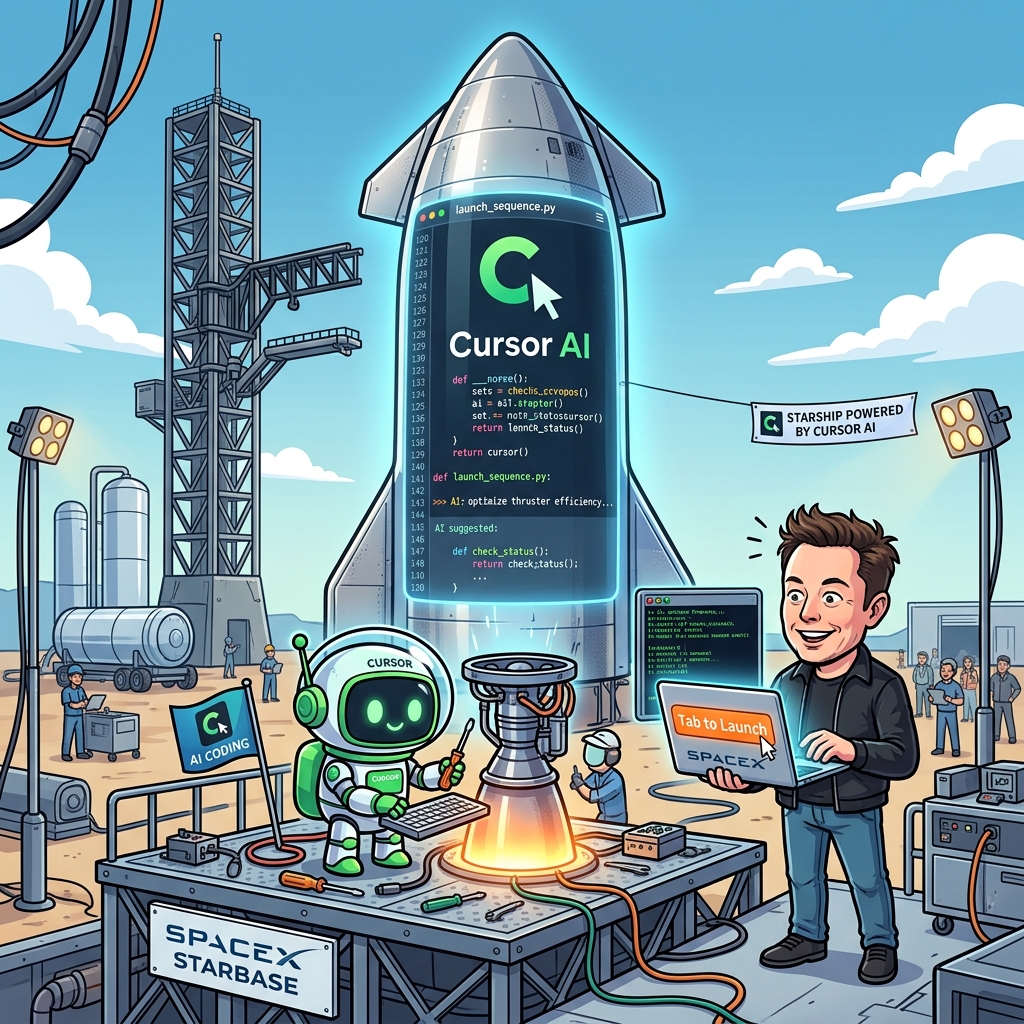
If you thought AI coding in VS Code for web pages was cool, Elon Musk has a message for you: Your vision is too small.
"Imagine a Raptor engine throwing a 500 Error at 30,000 meters, and you just hit Tab in the console to let Cursor autocomplete the pressure valve logic."
Space-Grade AI Agents: Beyond Autocomplete
On April 23, 2026, SpaceX officially announced a strategic partnership with Cursor. This isn't just a corporate shout-out; it's a **$60 billion** deep integration.
The core of this deal is the development of **"Space-Grade AI Agents."** These agents don't just know Python and Rust; they understand orbital mechanics, fluid dynamics, and how to fix memory leaks in a vacuum.
Why Cursor?
- Unified Agent Workspace: Starship has thousands of subsystems. Only Cursor 3’s parallel agent capability can check the fuel pumps and life support systems simultaneously.
- Interactive Canvases: Engineers can now drag-and-drop nozzle angles in the editor while the AI updates the control logic in real-time.
- Insane Iteration Speed: Musk loves exploding rockets; Cursor loves refactoring code. The combination is a "devastating" efficiency boost.
The New Unofficial SpaceX Motto:
"Move Fast, Break Things, and Cmd+K to Fix Them."
(Move Fast, Break Things, and Cmd+K to Fix Them.)
The First Line of Code on Mars
According to the agreement, future Mars missions will be entirely driven by autonomous systems based on the Cursor architecture. This means the first humans to arrive on Mars might not speak English, but they will definitely use @Codebase.
Conclusion
AI-native development tools have evolved from "writing CRUD apps" to "exploring the stars." If you haven't mastered Cursor yet, you might not even be able to drive a Mars rover soon.